
Rippers
Where and How Is a Ripper Used?
Application scenarios and site methods for blast-free ripping with a single tooth ripper in bedded, fractured and frozen ground.
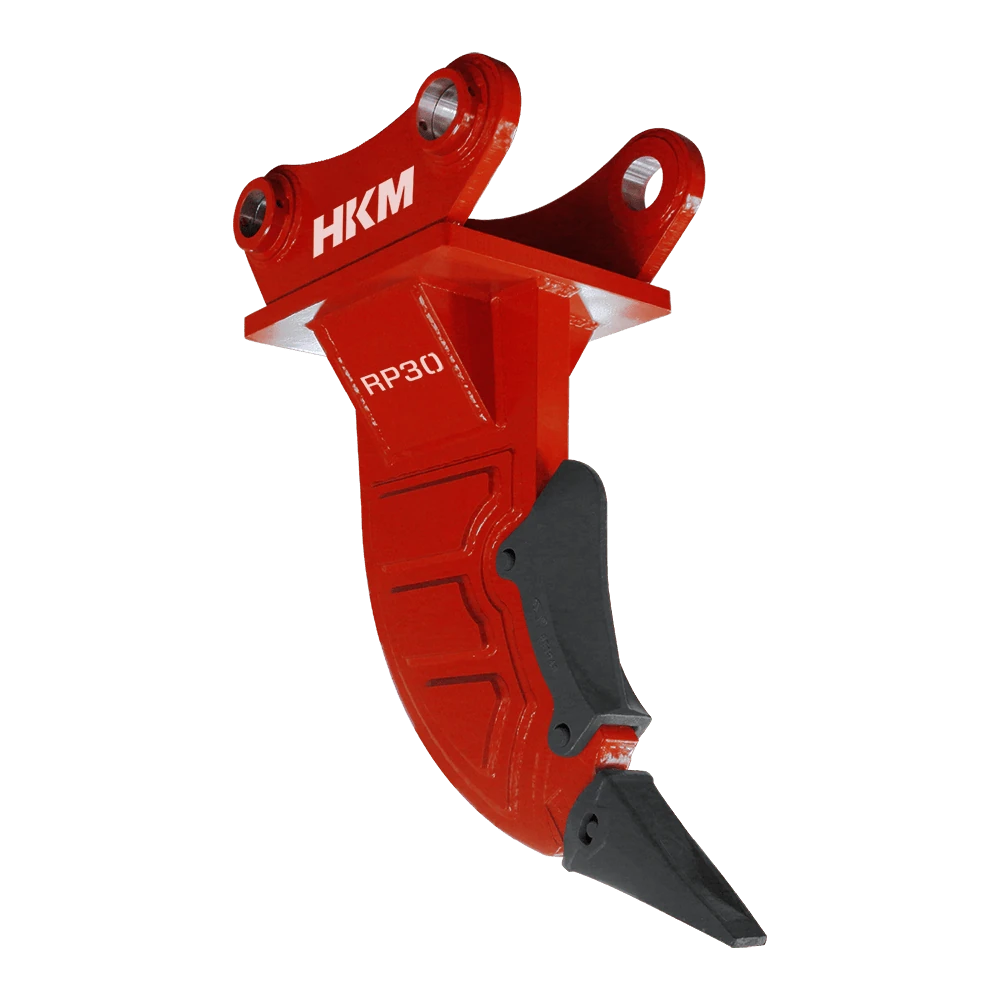
A ripper is a single tooth, high penetration attachment mounted on the excavator stick. It is used to loosen bedded, fractured or weathered rock and frozen, hardened ground without blasting. The pointed tooth is driven into a weak plane in the ground, advances along the layer under the pulling force of the stick and the hydraulic cylinders, and breaks the material into pieces a bucket can dig. The result is continuous ripping along the line, with low vibration and without the need for a blasting permit.
A ripper works on different logic from a breaker. A breaker shatters rock where it lies with point impact; a ripper opens a continuous line of failure along the layer from the point where the tooth enters. Where the ground has bedding, a joint network or weathering, a ripper often advances faster and loosens a wider area in the same time. That is why the practical rule on site is clear: try the ripper before you move to the breaker. If on a short trial pass the tooth enters the layer and the material lifts in slabs, ripping carries on with the ripper.
This approach has one clear limit. In massive, unfractured, high strength rock the tooth finds no weak plane to bite into; forcing the attachment under those conditions wears out the tooth and the mounting bracket without producing progress. There the right tool is the breaker. Below you will find how the ripper is actually used in earthmoving and infrastructure, mining and foundation work, step by step from job preparation to pulling direction, and from following the layer to lifting out the ripped material.
Earth-Moving & Infrastructure
Ripping along trenches and routes by following the layer
In utility excavation the ripper comes in on the bedded rock, cemented fill and frozen ground sections along the route. Job preparation starts with reading the ground: the strike of the layers along the excavation line, the joint network and the boundaries of any old fill are established. The positions of existing pipes, cables and manholes are marked; the deep, powerful pull of a ripper is a risk to unmarked services. A short trial pass follows: if the tooth enters the layer, the section is ripped, and if it does not, a breaker is planned for that stretch.
During work the carrier is positioned relative to the trench axis and the tooth is driven into the weak plane at the open edge of the layer. As the stick is drawn back towards the machine, the tooth advances along the bed and lifts the material in slabs. Work starts with shallow passes; the line is taken one step deeper on each pass and, where necessary, cross passes break out jammed blocks. The loosened material is lifted out with a bucket, and the trench invert and slopes are profiled with the bucket. On crews using a quick coupler the change between ripper and bucket is short, so the ripping and digging cycle runs without interruption.
The output is loose, diggable material suited to preparing the pipe bed. On sections inside built up areas, the low vibration of ripping is an advantage for the surrounding structures compared with blasting or continuous impact breaking. Where a lens of massive rock appears along the route, however, there is no point insisting on the ripper; that section is taken with the breaker, and the ripper comes back in on the next bedded stretch.
- Mark the strike of the layers and the existing services along the excavation line in advance.
- Make a trial pass in each section; if the tooth enters the layer, carry on with the ripper.
- Drive the tooth in at the open edge of the layer and work the stick towards the machine on the pulling axis.
- Advance in shallow, parallel passes; deepen the line one step at a time on each run.
- Change method at a lens of massive rock; take that section with the breaker.
A common mistake on site: putting side load on the tooth
A ripper tooth is designed to work in the pulling direction. Swinging the stick sideways to scrape material puts side load on the tooth and the mounting bracket; it wears the tip early and strains the connection. Ripping should always be done on the pulling axis, and gathering and scraping material left to the bucket.
Mining & Quarrying
Overburden removal and selective production in weathered formations
In an open pit the ripper's main job is overburden removal: the weathered, fractured layers above the ore or the sound rock are ripped off without blasting. On sites where blasting depends on a permit or is restricted because of proximity to settlements, ripping is one of the blast-free methods that keeps production going. During preparation the strike and dip of the formation are established; the ripping lines are planned to suit that structure and the heavy class carrier is set up on a wide, level working surface.
The operator works in parallel, adjacent lines: the tooth is driven into the weak plane of the bed, pulled down dip, and the material lifts in slabs. Each new line takes advantage of the free edge loosened by the previous one, so penetration gets easier and ripping speed rises as the lines progress. The loosened overburden is lifted with a loader or bucket and a clean working surface is exposed beneath. Selective ripping is possible by following the contact between ore and overburden, which reduces mixing and protects the quality of the feed going to the plant.
The ripper's limit in the pit is just as clear: if the tooth makes no progress on the trial pass, the formation is treated as massive and the method changes; a heavy breaker takes over for point breaking, and drilling and blasting for planned production. A ripper also loosens material without sizing it; if large blocks come out of the ripping, reducing them falls to the breaker or the crusher bucket.
- Plan the ripping lines to suit the strike of the beds; the tooth advances more easily pulling down dip.
- Work in parallel, adjacent lines so each line uses the free edge opened by the one before.
- Rip selectively by following the contact between overburden and ore; keep material mixing down.
- If a trial pass makes no progress, treat the formation as massive and change method.
The critical distinction: loosening is not sizing
A ripper makes material diggable and loadable; it does not determine piece size. Reducing the large blocks that come out of ripping is the breaker's job, and producing screenable material the crusher bucket's. Keeping these two steps separate in the work plan stops you asking the ripper for something it was never meant to do.
Foundation Works
Loosening in stages on the way down to foundation level
Foundation excavation often runs on sites adjoining buildings, where blasting is impossible. As the dig deepens, the hardened fill, bedded rock or weathered zone above the rock can be too tight to take out with a bucket. Here the ripper works as a low vibration intermediate step: the hard layer is loosened, lifted with the bucket, and the excavation drops to the next stage. In preparation, the ground investigation and the layers exposed during excavation are assessed together, so it is known in advance at which stages ripping will be needed.
The work runs as a staged cycle: at each stage, ripping first, then digging and hauling with the bucket. In a narrow foundation pit the pulling direction is planned towards the inside of the excavation; deep pulls towards neighboring foundations and slope toes are avoided. On the final stage, where level matters, the passes are made shallower: as the foundation base is approached, the aim is to leave an undisturbed base at the level the design calls for. In winter the same method is used for the frozen crust at the surface; the crust is broken with the ripper and the ground beneath is dug on the normal cycle.
The output is a foundation pit taken down to base level and cleared of diggable material. If massive, sound rock appears at base level, the ripper's job ends there; trimming to level and precision profiling pass to the breaker or the drum cutter. Using the ripper aggressively just above base level is not right either: deep passes can crack the underlying ground and spoil the quality of the surface the foundation will bear on.
- Take the excavation down in stages; at each stage loosen first, then lift with the bucket.
- In a narrow pit, plan the pulling direction towards the inside of the excavation and avoid deep pulls towards neighboring foundations.
- Reduce pass depth as base level is approached; do the final trim with the bucket.
- In winter, break the frozen crust at the surface with the ripper before digging.
A common mistake on site: deep passes at base level
Deep, aggressive ripping just above the foundation base can crack the ground the foundation will bear on. Make the passes shallower on the last stage; lift the remaining thin layer with the bucket and leave the base undisturbed. If the ground report notes that the base is sensitive, finish ripping one stage higher.
Frequently Asked Questions
How is a ripper used in frozen ground?
In frozen ground the hardness is concentrated in the crust at the surface. The tooth is driven in at the open edge of the crust and the crust is lifted in slabs along the pulling line. Once the crust is off, the ground beneath can usually be dug with a bucket. In deeply frozen ground, work advances in shallow, staged passes; ripping layer by layer is preferred to one deep dive.
Can a ripper be used in massive, unfractured rock?
It is not recommended. Where there is no weak plane for the tooth to bite into, penetration does not happen; forcing the attachment wears the tooth and the mounting bracket without producing progress. The right approach there is point breaking with a breaker, or a planned drilling and splitting line. A short trial pass shows quickly on site whether the ground is rippable.
How is the pulling direction decided when working with a ripper?
The pulling direction is set by the strike and dip of the ground. The tooth is driven into the weak plane at the open edge of the layer and the stick is worked towards the machine on the pulling axis; penetration is easier pulling down dip. Swinging the stick sideways puts side load on the tooth and is a movement to avoid.
How is material loosened by the ripper lifted afterwards?
A ripper makes material diggable but does not gather or load it. The loosened material is lifted with a bucket or loader; if large blocks come out, a breaker or crusher bucket comes in to reduce them. Where the carrier has a quick coupler, the change between ripper and bucket is short and the ripping and loading cycle runs without interruption.
Related Applications
Get access to the HKM Dealer Portal
Access pricing, stock availability, spare parts, and technical resources. Apply now to benefit from HKM privileges designed to strengthen your business and operations.