
Mining & Quarrying
Underground Mining
Attachment solutions that keep ore production moving under conditions set by the narrow cross section, the ventilation and the haulage line.
In underground mining, production is a cycle in which excavation, ground support and haulage follow one another inside the same confined space. The aim is not to build and hand over a structure but to bring ore to the surface continuously and safely; drifts therefore grow longer as production advances, working faces keep moving, and the equipment plan follows that movement.
In this environment the site sets the rules. The drift cross section decides which carrier can come in: mini and compact classes work in narrow development headings, while large section main drifts and wide production openings also admit heavy class carriers. Ventilation capacity limits how many machines can run at the same time, and the dimensions of the haulage line turn fragment size into a production question that has to be planned at the excavation stage.
Within this cycle, HKM attachments work on four distinct duties: roof and wall scaling after blasting, breaking the boulders that build up on the grizzly, trimming the drift profile and the floor, and low vibration excavation around ground support. Since getting a machine underground is a cost in itself, loading several duties onto a single carrier with a quick coupler is the clearest productivity lever in this environment.
The rules underground
- The drift cross section sets the machine class: only mini and compact carriers enter narrow development headings, while heavy class breakers and cutters work only in large section drifts and wide production openings.
- Ventilation and exhaust arrangements limit how many diesel machines can run at the same time in a confined space; because the attachment is fed from the carrier's hydraulics and needs no extra power source, it keeps that calculation simple.
- No crew enters the face until roof and wall scaling after the blast is complete; scaling is done by machine and from a safe distance.
- Heavy impact and shaking are avoided around rock bolts, mesh and shotcrete; ground support is a system that works together with the rock, and its bond with the rock must not be disturbed.
- The haulage line puts a limit on fragment size: a boulder that will not pass the grizzly opening stops production, so size control is part of the job from the moment of excavation.
- Taking a machine underground, maintaining it there and bringing it out again when needed is expensive; the plan is built on doing more with fewer machines, and every attachment change has its place in that plan.
How attachments work underground
Roof scaling and breaking boulders on the grizzly
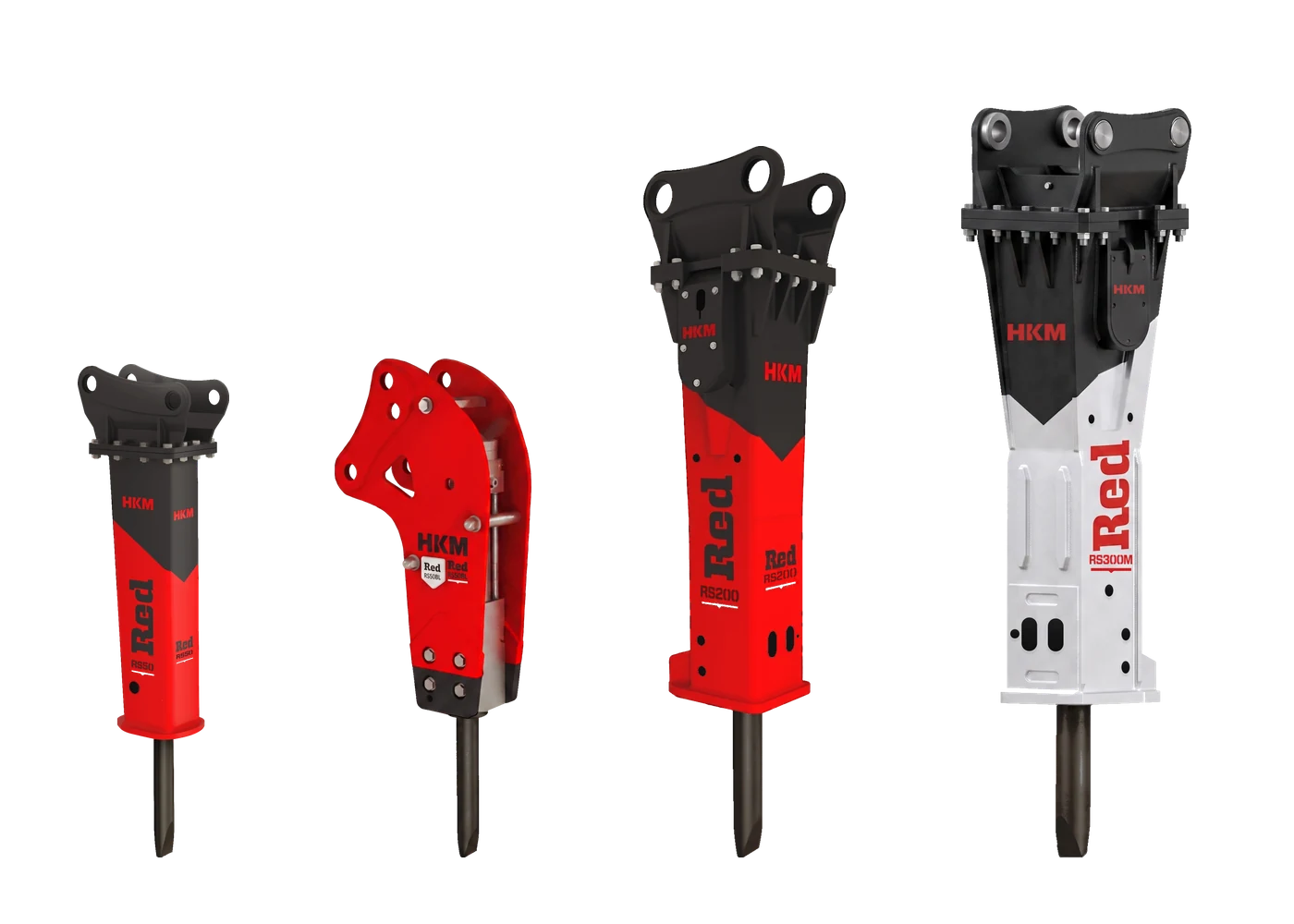
Underground, the breaker has two typical jobs: bringing down the loose pieces on the roof and walls from a safe distance after blasting, in other words scaling; and breaking the oversize boulders that sit on the grizzly and will not pass the opening. Both jobs open the safety and flow gates of the production cycle, which is why underground the breaker is as much a piece of safety equipment as a production tool.
- Scaling advances from ground already scaled and sound toward the loose zone; work does not move to a new section until the fallen material has been cleared.
- A boulder on the grizzly is broken in place without taking the grizzly out of service; the pieces pass through the opening and ore flow restarts in short order.
- Breaker length and boom reach are chosen together with the drift cross section; in a narrow section the working angle comes from positioning the carrier, not from forcing the boom.
- In supported sections the impact point is kept away from rock bolts and shotcrete.
Following the seam and milling the drift profile
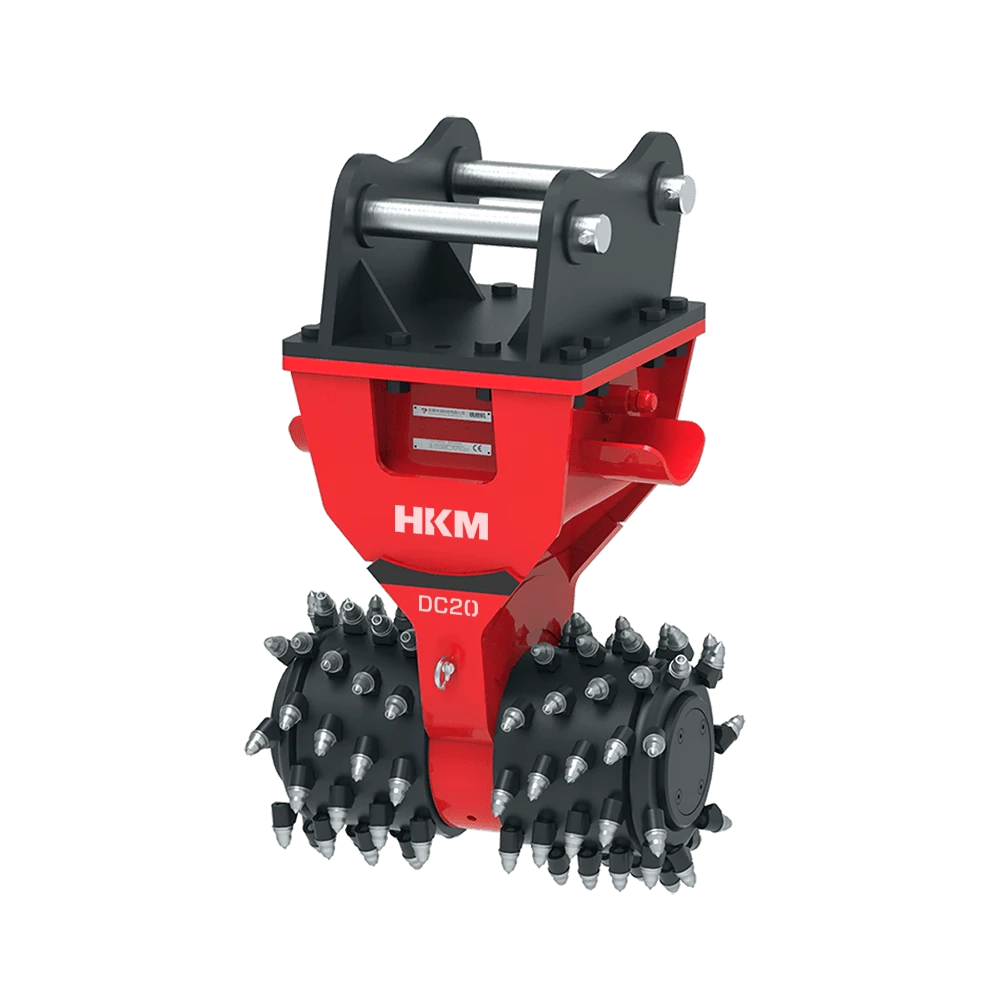
In medium hard ore and country rock, the drum cutter opens the drift to the target profile and mines selectively by following the contact between the seam and the country rock. Because it works blast-free, it creates no wait for gas clearance and puts no vibration load on its surroundings, which makes it easier to keep production running in sections where ventilation is tight.
- By following the seam boundary, ore and country rock are taken separately; dilution falls and the quality of the feed going to the plant is protected.
- Because the drift section is cut to the target profile, the need for extra trimming before ground support goes down.
- Since the milled output is fine sized, the risk of blockage at the grizzly and in the ore pass drops.
- With the waiting and clearance steps of the blasting cycle gone, work continuity improves in sections with limited ventilation.
A precise surface on the drift floor and walls
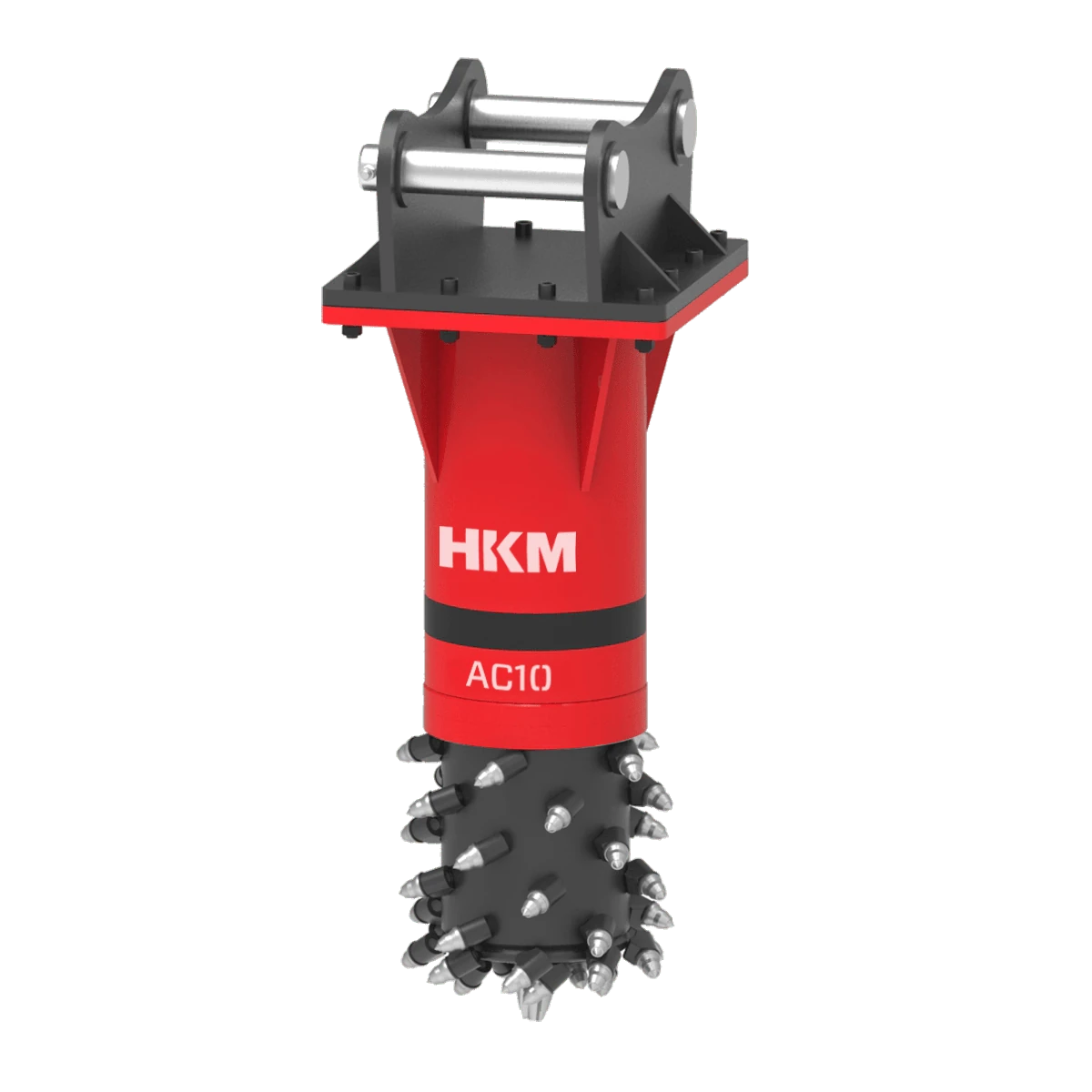
With its wide contact face, the vertical drum cutter works on trimming the drift floor and the wall surfaces. Its compact body leaves room to maneuver in a narrow cross section, and low vibration milling brings the surface to target without disturbing the ground support around it.
- The floor of haulage drifts is kept even; vehicle running gear and the loads they carry are shaken less.
- Wall surfaces are trimmed before rock bolts, mesh and shotcrete go in; support elements seat properly on an even surface.
- Floor grade and the drainage line are cut without shaking the adjacent ground support.
The underground way of doing more with fewer machines
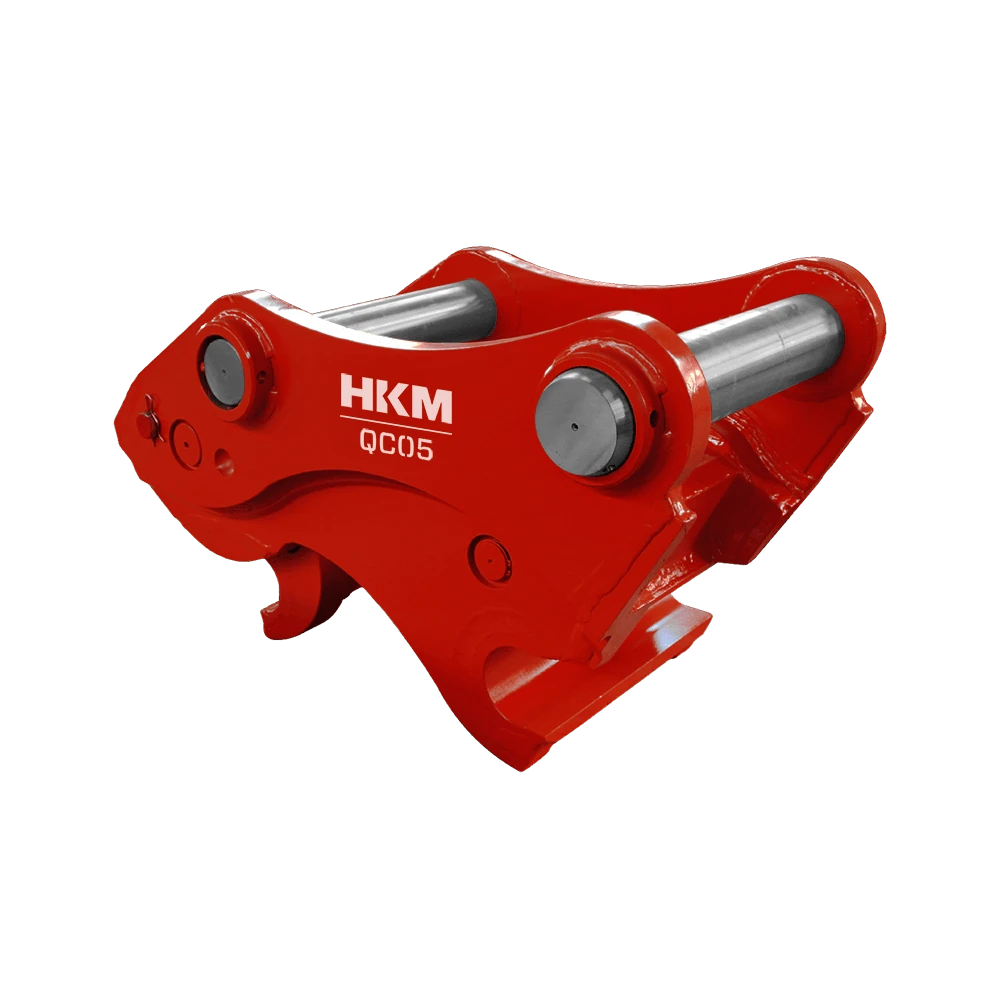
Because getting a machine underground is expensive, the real question is not which attachment to buy but how many jobs a single carrier can take on. The quick coupler turns the change between breaker, drum cutter and bucket into a short operation managed from the cab, and runs one carrier in rotation across scaling, breaking, trimming and cleanup.
- The attachment station is set up in a scaled pocket that does not block haulage traffic and carries no risk of rockfall.
- Scaling, block breaking and floor cleanup run one after another on the same carrier; the need to take a second machine down falls away.
- In limited lighting a visual check can mislead; the lock is verified at every change by pressing the attachment against the floor.
- Because the operator does not leave the cab, foot traffic inside the drift and the risk that goes with it are reduced.
Frequently Asked Questions
How are the oversize boulders that build up on a grizzly or ore pass broken?
A boulder that will not pass the grizzly opening is broken up with a hydraulic breaker on top of the grizzly, without shutting the pass. The work is carried out from a safe distance, from a position where the carrier stands on sound ground; as the boulder gets smaller the pieces fall through the opening on their own, and the haulage line reopens in short order.
What matters when scaling the roof and walls after a blast?
Scaling is done before any crew enters the face, and always from a safe distance. The carrier positions itself in a section that has already been scaled and is sound; loose pieces are brought down working from the sound zone toward the loose zone, and work does not move to the next section until the fallen material has been cleared. Low vibration equipment is preferred so that scaling does not disturb the sound rock around it.
Why is low vibration excavation required around rock bolts and ground support?
Rock bolts, mesh and shotcrete form a support system that works together with the rock; heavy impact and shaking can weaken the bond between that system and the rock. Near supported sections, taking material in layers by milling, or keeping the impact point away from the support elements, preserves the stability of the drift.
How do I get more work out of fewer machines underground?
Because taking a machine underground, maintaining it there and bringing it out again is far more demanding than on the surface, the plan is built around few machines. A single carrier with a quick coupler takes on scaling, block breaking, floor trimming and cleanup through attachment rotation. If you share your drift cross sections and the split of work with us, we will plan the right carrier class and attachment set together.
Get access to the HKM Dealer Portal
Access pricing, stock availability, spare parts, and technical resources. Apply now to benefit from HKM privileges designed to strengthen your business and operations.
Let's choose the right equipment for your project together
Let our expert team recommend the ideal attachment and carrier match for you.
Get in Touch