
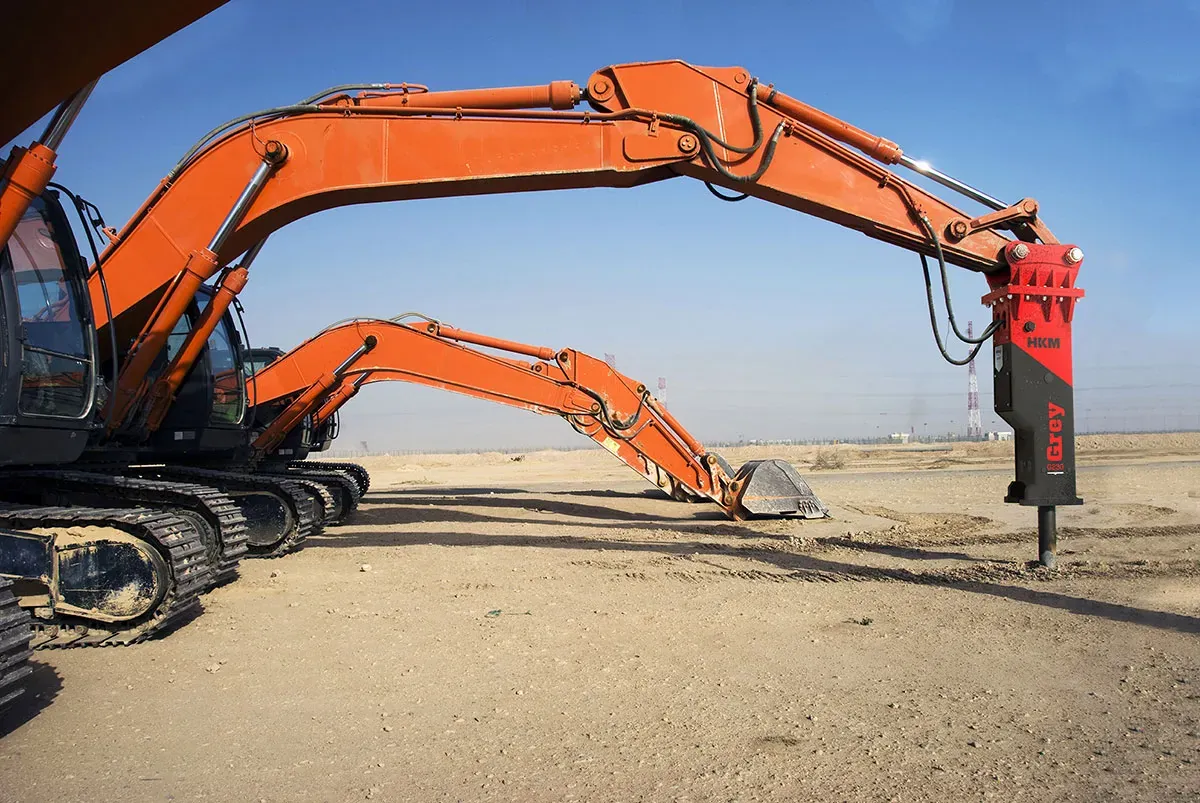
Mining & Quarrying
Surface Mining and Quarrying
Attachment solutions for open pit production shaped by bench layout, slope geometry and seasonal conditions.
In an open pit, production is a chain: overburden is removed, rock is loosened or blasted, material is loaded, crushed and screened. The pace of the chain is set by its slowest link, not its strongest; a single boulder that will not fit the crusher mouth disrupts the loading pattern and spreads the delay through the whole chain. That is why the attachment plan is built around the flow of the chain, not around individual machines.
On sites where blasting is possible, attachments support the chain: the ripper strips overburden and weathered sections without blasting, the breaker reduces the oversize boulders left after the blast, and drum and vertical drum cutters bring bench and slope faces to the target geometry. In quarries close to settlements, or where a blasting permit cannot be obtained, the same attachments take over production itself: a fully mechanical production line is built from ripping, cutting and sizing steps.
Working in the open does not mean working easy. The seasons change the method: in winter the frozen upper layer stands in the way of ripping, and after rain no one works below a bench until the slope faces have been checked. Long haul distances make sizing material on site worthwhile, while the quick coupler shortens the change from job to job within a shift and puts the same carrier to work in more than one link of the chain.
The rules of the open pit
- Bench height and slope angle follow the design geometry; excavation that strays from the geometry puts both slope stability and site safety at risk.
- The pace of the chain is set by the regularity of the crusher feed; a boulder that will not fit the mouth is reduced without delay, otherwise the wait spreads through the whole production line.
- Blasting depends on a permit and is not possible on every site; in quarries close to settlements, production is planned around blast-free methods.
- The rock is abrasive and dust is constant: wear on breaker tools, picks, teeth and jaw plates is not a breakdown but a planned production cost.
- The seasons change the method: frozen ground dictates the ripping method in winter, and slope checks after rain dictate the order of work.
- Haul distance drives up cost; sizing material on the bench where it comes out cuts haulage and reduces the need to bring in material from outside.
How attachments work in the open pit
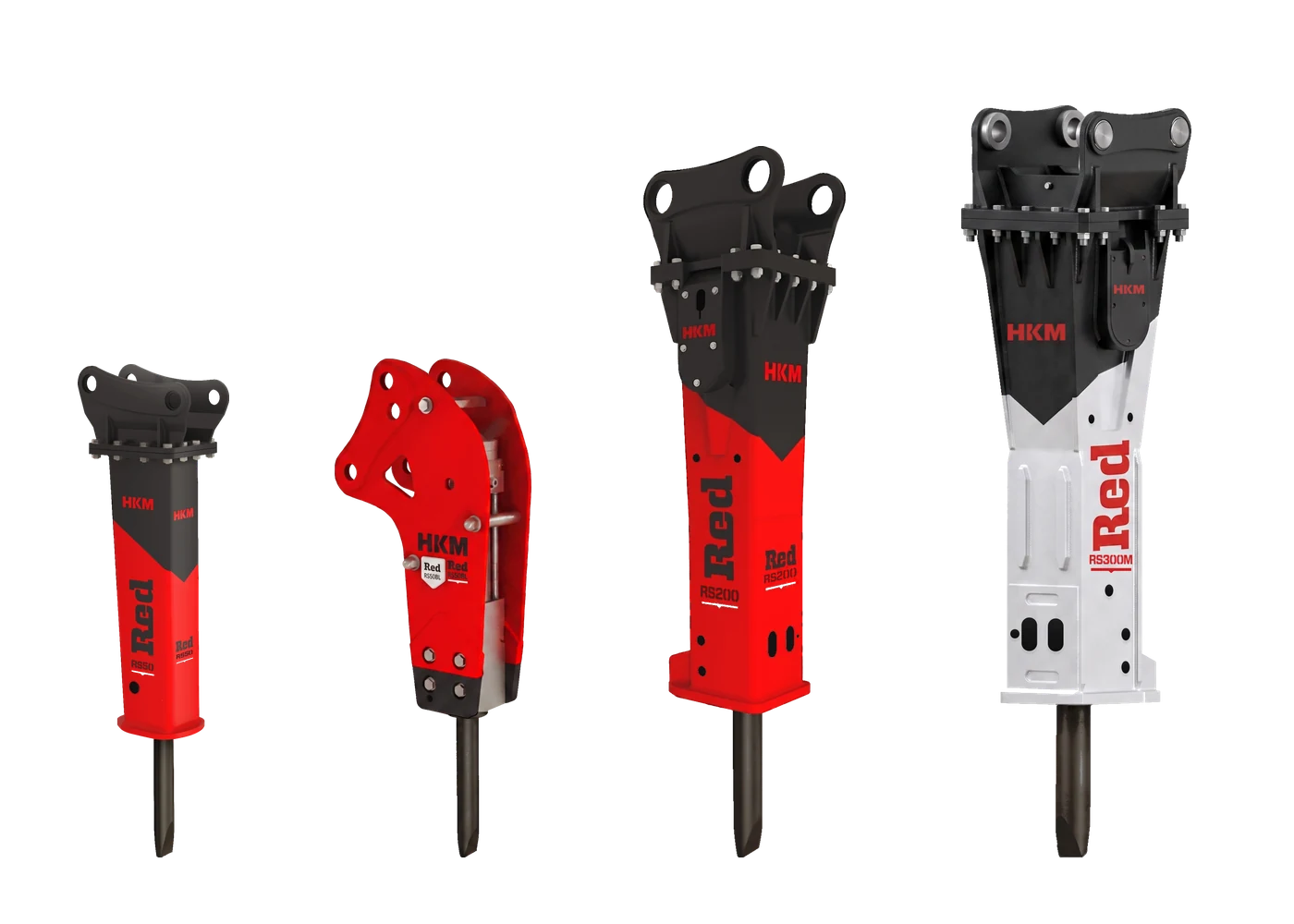
The power that keeps the crusher feed regular
In the open pit the breaker's most visible job is reducing the oversize boulders left after blasting that will not fit the crusher mouth; a regular feed size speeds up the entire chain. On sites where blasting is restricted, it takes on primary breaking of the hard bands and opens up the heavy sections of the mechanical production chain.
- Oversize boulders are reduced at the toe of the bench instead of being hauled to the crusher; no backlog builds up on the feed line.
- In a quarry close to settlements, the breaker is the hard rock link in the blast-free chain built with the ripper, the drum cutter and the crusher bucket.
- In winter, thick and massive frozen sections the ripper cannot advance through are opened with the breaker.
- In abrasive rock, tool life is a production cost; tool checks and changes are built into the shift plan.
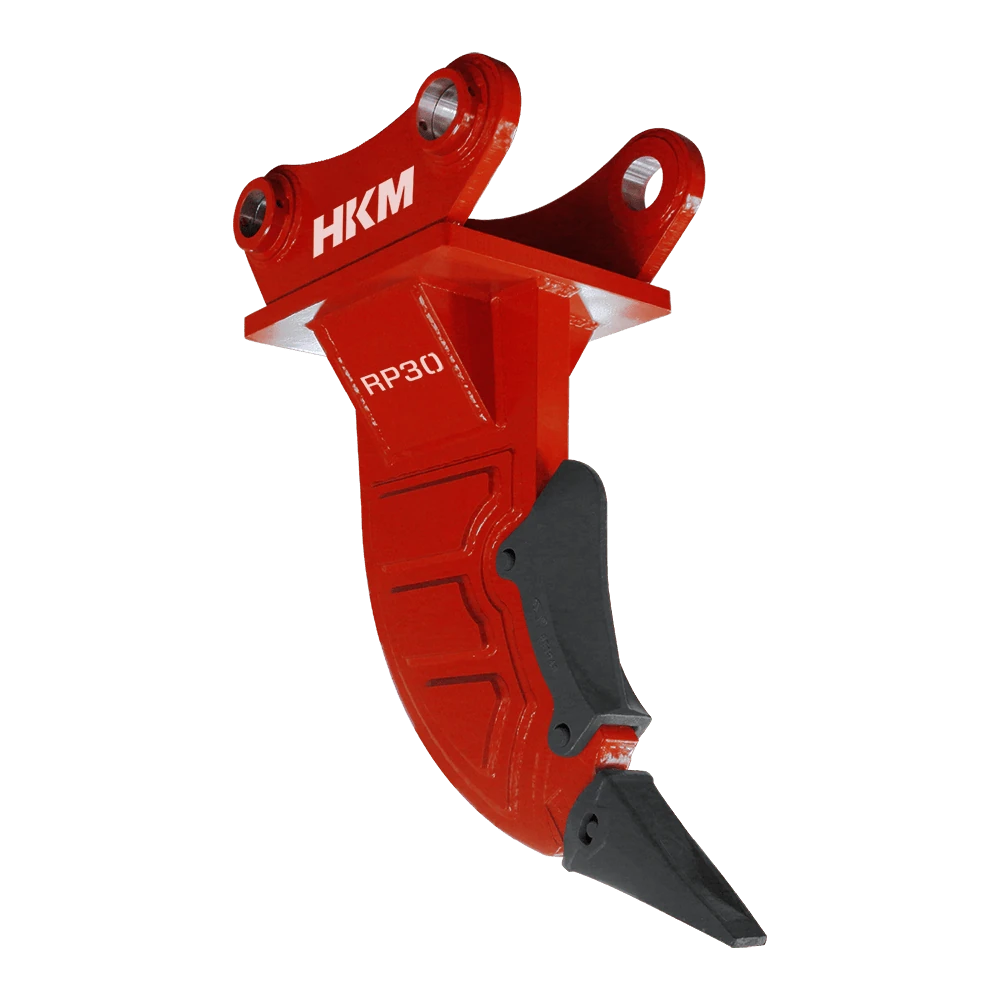
Stripping the overburden above the ore without blasting
In the open pit the ripper is the equipment of the overburden face: weathered, bedded and fractured overburden is ripped without blasting, opening a clean working surface down to the ore or the sound rock. On frozen ground the same method keeps production from stopping through the winter months.
- Overburden removal is planned as a separate face advancing ahead of the production benches; it does not clash with ore production.
- At the start of winter the frozen crust is opened with the ripper; the stripping program is not suspended because of the season.
- On sites where blasting is restricted, the overburden program is built entirely on mechanical ripping.
- In sections that produce large pieces, size reduction is assigned to the breaker or the crusher bucket; the ripper stays on the ripping line.
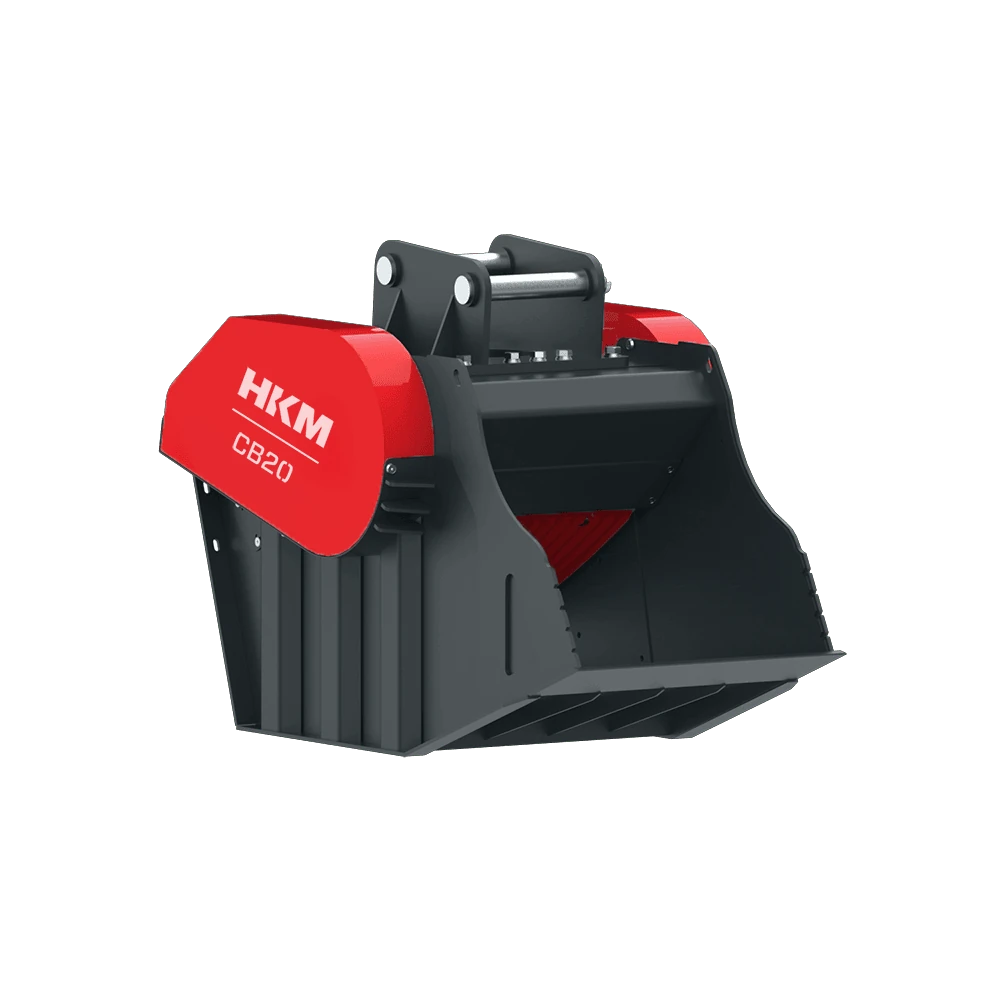
On-site sizing that shortens the haul
On benches far from the main crusher, at temporary production points and during plant shutdowns, the crusher bucket processes material where it comes out and shortens the truck cycle. Material for haul roads, platforms and fill inside the pit is produced on site instead of being brought in from outside.
- Material that would be hauled from a remote bench to the plant is brought to screen-ready size in place; the number of round trips falls.
- While the crusher is down for maintenance, unscreened stock is processed with the bucket; the feed gap is closed.
- Material for haul roads and platforms inside the pit is sourced from the site itself; aggregate bought in from outside is reduced.
Production by milling in a quarry on the settlement boundary
In quarries where blasting is ruled out by noise, vibration and flyrock, production shifts from impact methods to continuous cutting; under these conditions the drum cutter keeps production going by taking the rock layer by layer. Because it cuts bench and slope faces to the target geometry, it also reduces the need for a separate trimming pass.
- On sections along the neighboring boundary, noise and vibration management is solved by the choice of method itself: milling instead of impact.
- The fine, uniform output goes straight to the screening line in suitable material, bypassing the crusher.
- As the formation gets harder the roles change: massive bands are left to the breaker, and the drum stays on slope and profile work.
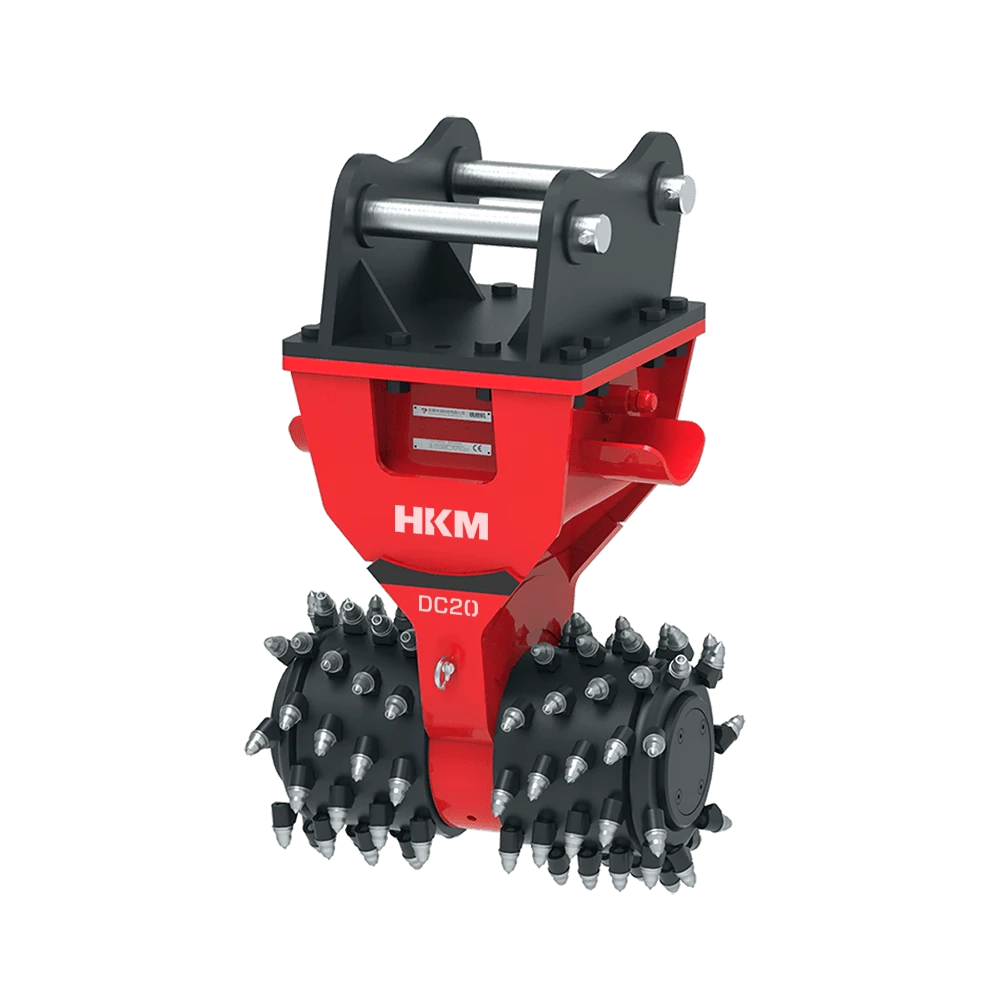
Wide surface work on slopes and bench floors
Thanks to its wide contact face, the vertical drum cutter moves fast on area work such as slope trimming, bench floor leveling and haul road surfaces inside the pit. Renewing surfaces damaged by rain and frost is another of this attachment's typical jobs in the open pit.
- Slope faces gullied or loosened after rain are brought back to profile without blasting.
- The bench floor where drilling and loading equipment will work is kept level; both work more efficiently on level ground.
- Permanent slopes and slopes due for rehabilitation are finished with an even surface ready for inspection.
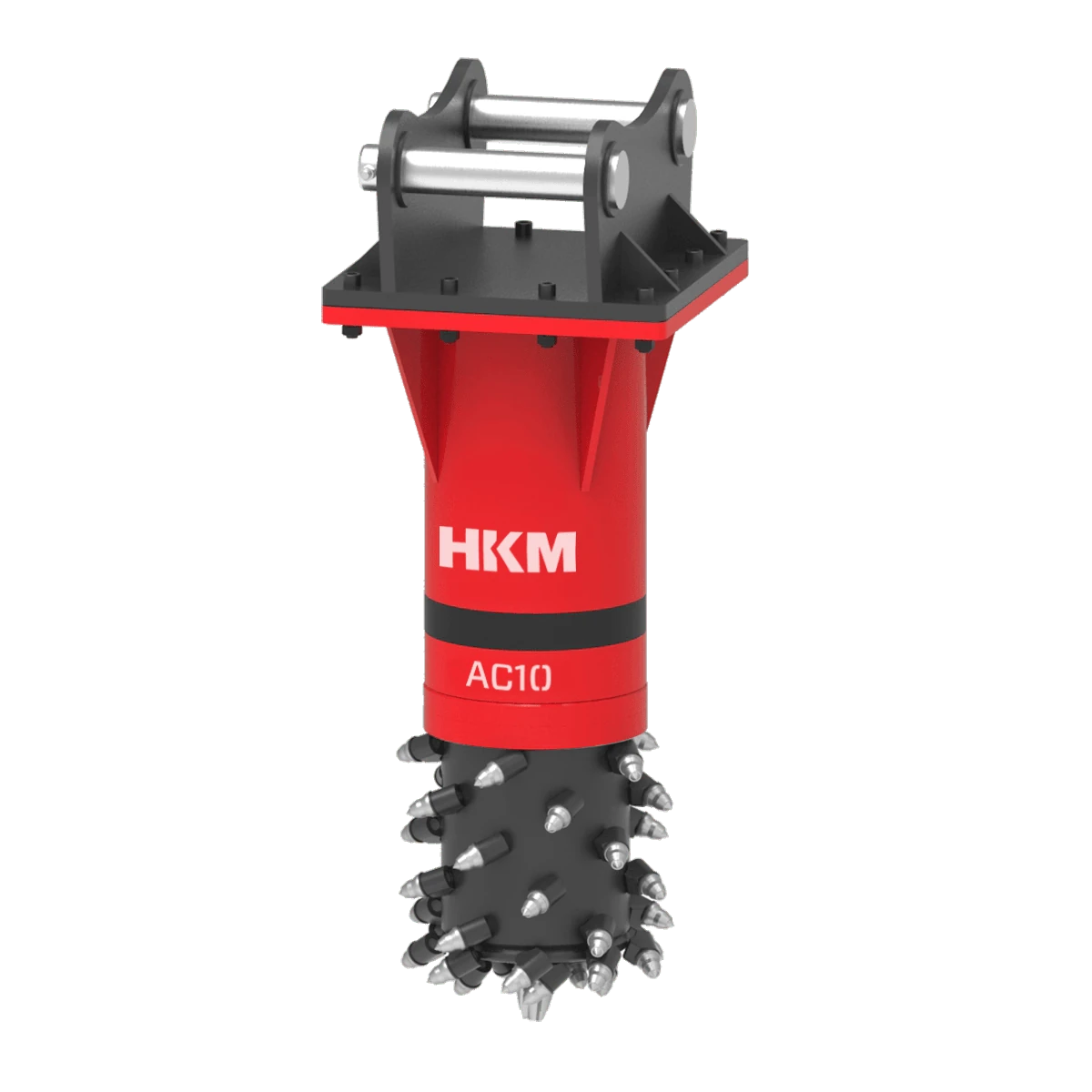
Changing from job to job within the shift
In the open pit the workload shifts from one kind of job to another through the day: a face that needs block breaking in the morning may call for road maintenance or slope trimming in the afternoon. The quick coupler absorbs this variability with a single carrier, and the change from job to job becomes a routine step in the shift plan.
- The rotation is tied to the production schedule: work is breaker heavy on blast days and leans on the ripper and the bucket on the days between.
- The attachment station is kept on level ground, away from the toe of the slope and the truck route.
- For a short job on a remote bench, the rotation of the existing carrier is widened instead of sending a second machine.
- Because the change is made from the cab, the operator does not walk on foot through truck traffic.
Frequently Asked Questions
How is production kept going in a quarry close to settlements?
On sites where blasting is restricted or tied to a permit, production is handed over to the mechanical chain: overburden and weathered sections are ripped with the ripper, hard bands are opened with the hydraulic breaker, bench faces are cut with the drum cutter and the material is sized with the crusher bucket. Noise and vibration management is part of the choice of method in this chain.
Why does keeping bench and slope geometry in order matter?
Geometry is a matter of both safety and production: an even bench lets drilling and loading equipment work efficiently, while a slope that steepens out of control creates rockfall and stability risks. Drum and vertical drum cutters bring surfaces damaged during excavation back to the target geometry without blasting.
How do seasonal conditions affect open pit production?
In the winter months the frozen upper layer hardens beyond what a bucket can dig; this crust is opened with the ripper, and with the breaker in thick, massive sections. In wet periods no one works below a bench until the slope faces have been checked; damaged surfaces are brought back to profile with the axial drum, and wet material is not fed to the crusher bucket until it has drained.
How does sizing material on site cut haulage costs?
On benches far from the main crusher, trucking material to the plant and bringing it back processed is one of the hidden lines in the production cost. The crusher bucket brings material to screen-ready or ready-to-use size at the point where it comes out; the need for haul roads and platforms inside the pit is met on site, and the truck cycle gets shorter.
Related Pages
Get access to the HKM Dealer Portal
Access pricing, stock availability, spare parts, and technical resources. Apply now to benefit from HKM privileges designed to strengthen your business and operations.
Let's choose the right equipment for your project together
Let our expert team recommend the ideal attachment and carrier match for you.
Get in Touch